iBuyers vs. We Buy Houses Companies: The Real Difference
iBuyers vs. 'We Buy Houses' investors: business models, offer-percentage differences, best-fit seller for each, and DFW examples.
Last updated:
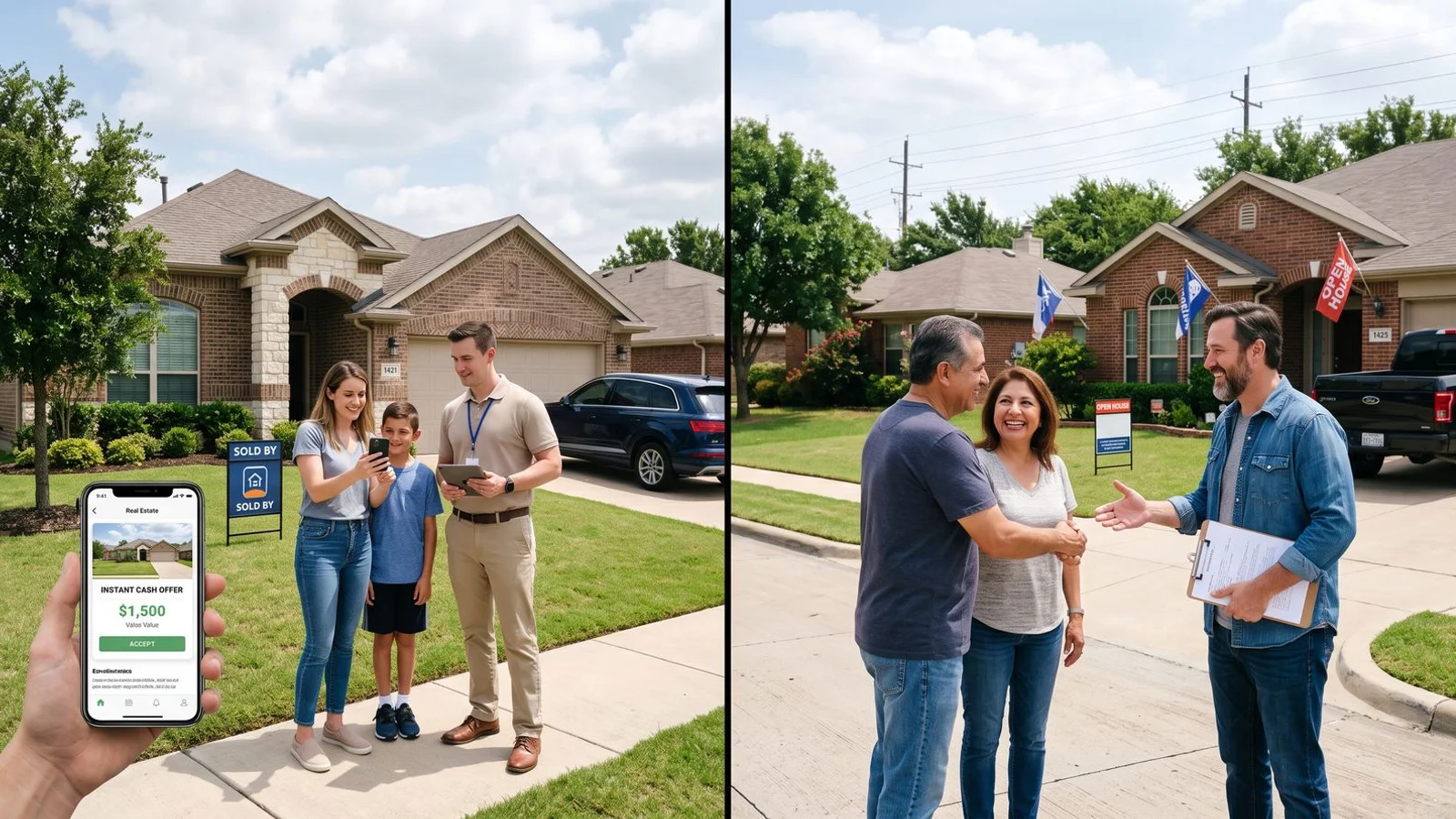
We hear the same question from Dallas-Fort Worth homeowners every week.
You want to know the real difference between ibuyers vs we buy houses companies before signing a contract. This choice dictates whether you walk away with a fair price or leave thousands on the table.
Our team wrote this guide as licensed Texas real estate agents (TREC #679806) to give you the exact facts. The details below will help you decide which cash buyer category actually fits your situation.
Business-model contrast (algorithmic iBuyer vs. local investor)
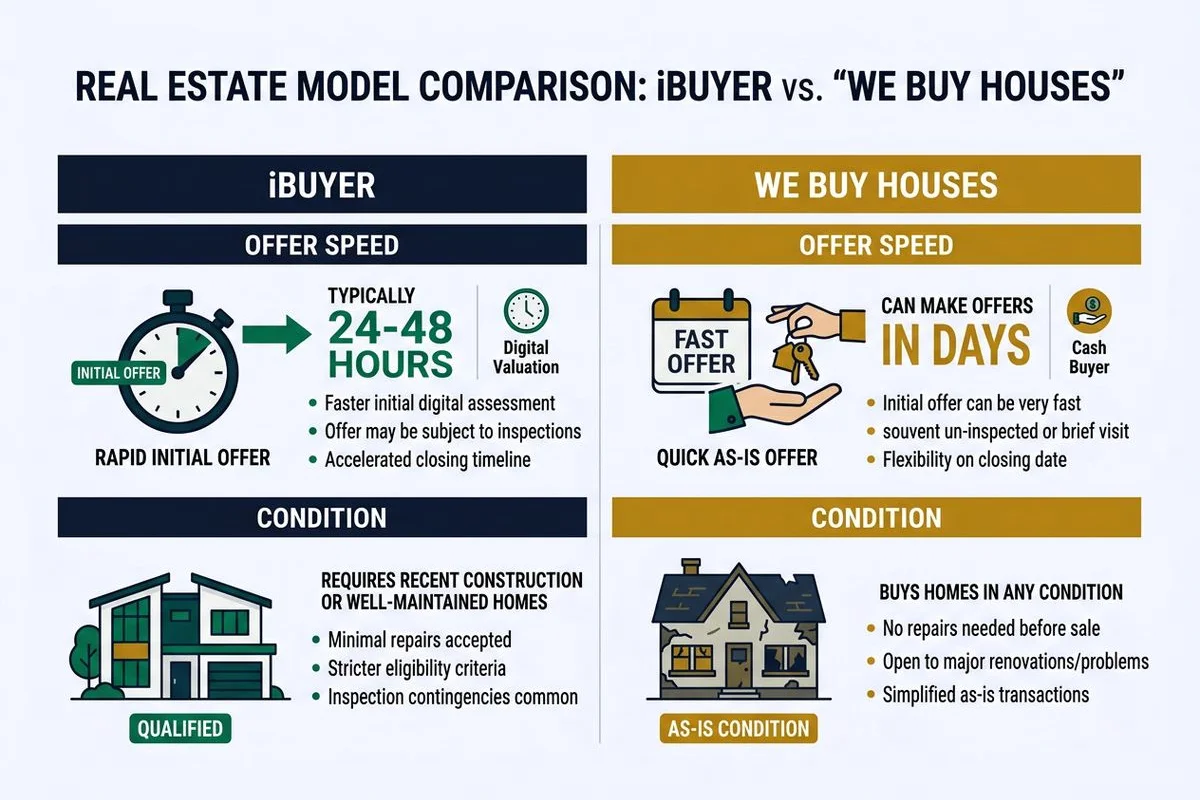
The core difference is that iBuyers purchase homes in good condition using algorithms, while local investors buy distressed properties to renovate. National iBuyers charge a service fee, whereas local cash buyers build their profit directly into a discounted purchase price.
Our market data shows that algorithmic buyers like Opendoor typically charge a 5% service fee. They rely on automated valuation models to flip homes quickly with minimal repairs.
Local investors operate on a completely different standard. These buyers purchase properties that need heavy repairs and use the 70% rule to calculate their bids. This means they offer 70% of the After Repair Value (ARV) minus the cost of renovations.
| Feature | iBuyer Model | Local Investor Model |
|---|---|---|
| Target Property | Move-in ready | Distressed or heavy repairs |
| Typical Fees | 5% service fee | No formal service fee |
| Offer Calculation | Automated algorithm | 70% ARV minus repairs |
| Closing Timeline | 14 to 45 days | 7 to 14 days |
Most sellers get tripped up by not accounting for the timing and cost side. Before you commit to any option, run your numbers against the Home Sale Net Proceeds Calculator so you are comparing net-to-you instead of the headline offer.
Offer-percentage differences
An iBuyer typically offers 78% to 90% of your home’s retail value before deducting fees and repair costs. Local cash buyers generally offer between 65% and 75% of the property’s estimated value after repairs.
We track the numbers closely to help clients maximize their returns. The Dallas-Fort Worth median single-family home price reached $415,000 in May 2026, meaning a small percentage difference equals a massive dollar amount.
Three hidden costs to watch for in any cash offer:
- Service percentages: Look for 5% to 8% fees masked as convenience charges.
- Repair credits: Deductions taken out of your net proceeds right before closing.
- Closing costs: Verify whether the buyer is paying the title and escrow fees.
Algorithmic buyers often present a high initial number to get your attention. A common pitfall occurs when they send an inspector for a virtual walkthrough and deduct thousands of dollars for non-negotiable repairs.
Local investors present a much lower headline number upfront. The advantage is that this lower bid is usually a firm commitment with zero service fees attached.
Practical implication for DFW sellers is that competing offers dictate the outcome. One offer is just a starting price, but getting two or three offers with a documented condition assessment creates a real negotiation.
Best-fit seller for each
An iBuyer fits best if your home is in good condition and you want a fast closing without public showings. A local investor is the better choice if your property needs major structural repairs and you want to sell it exactly as it sits.
Our experience shows that traditional homes sit on the DFW market for an average of 60 to 105 days in 2026. You might need to bypass that wait if you have a tight relocation timeline.
National algorithms will reject houses with significant defects. The notorious North Texas clay soil causes foundation shifting that automatically disqualifies many properties from algorithmic programs.
Choose an algorithmic buyer if you:
- Have a home built in the last twenty years.
- Possess a clean inspection report with no major structural damage.
- Want to avoid the hassle of staging and open houses.
A traditional cash flipper specializes in these exact distressed properties. They expect to fix roofs, level foundations, and update kitchens before reselling the home.
Choose a local investor if you:
- Face severe foundation or plumbing issues.
- Inherited a property full of unwanted belongings.
- Need cash in less than two weeks without any repair negotiations.
DFW examples of iBuyers vs we buy houses
Opendoor and Offerpad operate as the major algorithmic buyers across the North Texas region. The local category includes large franchise networks and independent flippers working specific neighborhoods.
Dallas actually serves as the national hub for the distressed property industry. The corporate headquarters for HomeVestors, the parent company of the famous “We Buy Ugly Houses” brand, sits right on Preston Road in Dallas.
| Buyer Category | Notable DFW Examples | Focus Area |
|---|---|---|
| Major iBuyers | Opendoor, Offerpad | Move-in ready suburban homes |
| National Franchises | HomeVestors | Distressed homes across the metroplex |
| Independent Investors | Local DFW cash buyers | Specific zip codes and older neighborhoods |
Our research indicates that Opendoor targets the higher-velocity suburbs like Plano, Frisco, and Arlington. They focus on uniform neighborhoods where automated data easily predicts resale values.
Local cash buyers operate heavily in areas with older housing stock or transitioning neighborhoods. You will find companies like DFW Cash Buyers or independent LLCs leaving postcards near properties that need updates.
Where to go next
The next step is to evaluate your exact property condition and gather competing bids. You need real numbers in hand to make an informed financial decision.
This guide is one piece of a larger topic. If you are weighing next steps, start with the parent hub: best cash home buyer companies dfw. Related situation guides link out from there.
We highly recommend requesting quotes from both categories of buyers to compare the net proceeds when deciding between ibuyers vs we buy houses. Still unsure which lane fits your specific home? Contact us and our team will point you to the right guide or company review.
Related guide: wholesalers vs. direct buyers
FAQ
What's the difference between an iBuyer and We Buy Houses?
iBuyers are institutional/algorithmic on near-retail homes; we-buy-houses investors target distressed homes at bigger discounts.
Which pays more?
iBuyers usually pay closer to market for good-condition homes; investors pay less for distressed ones.
Which should I use?
Depends on your home's condition and how fast you need to close.