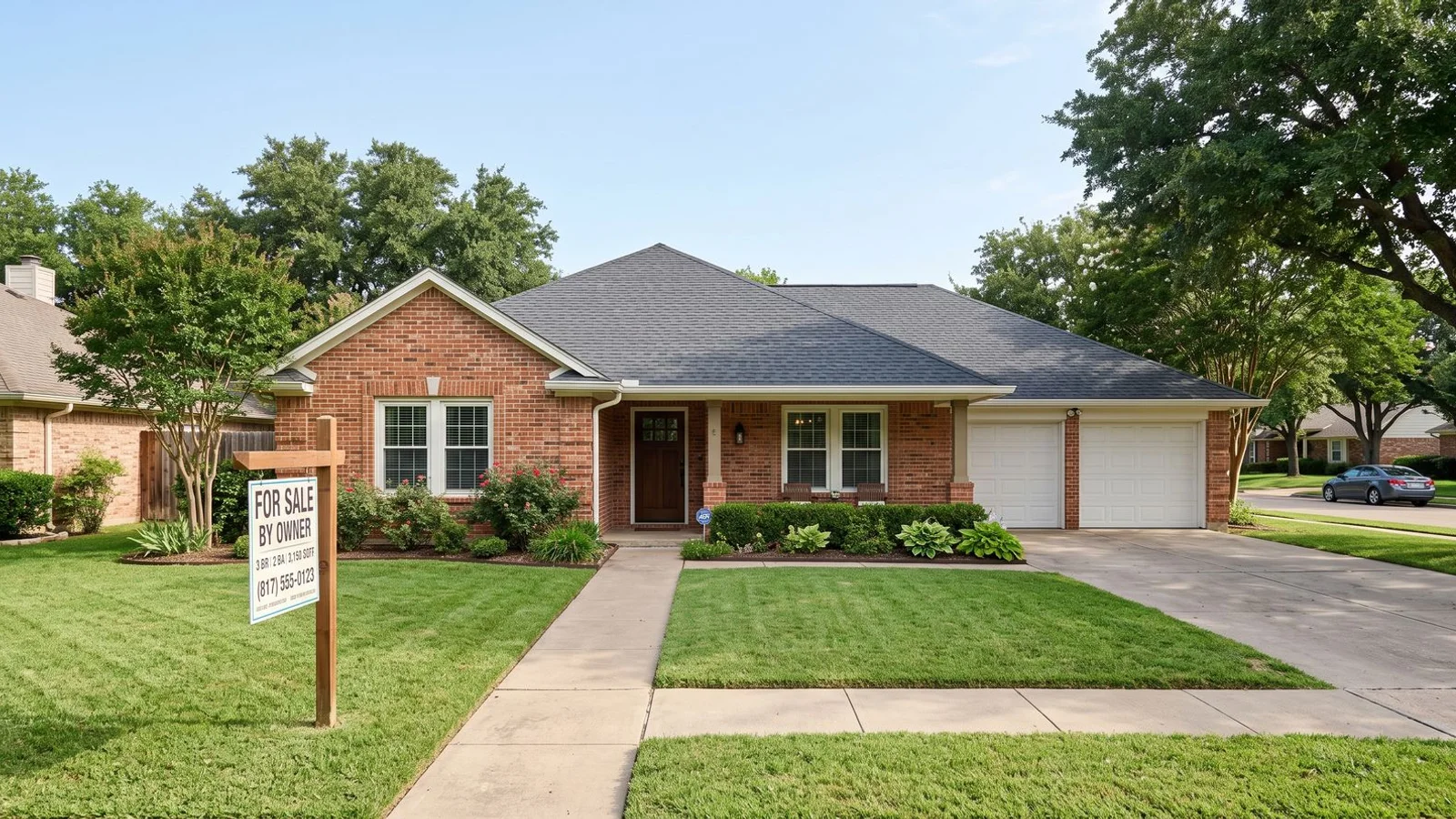
Fort Worth is not Dallas — the sale math is different
Fort Worth and Dallas share the same MLS (NTREIS) and are only 32 miles apart, but the two markets don’t behave the same way when you’re trying to sell fast. Fort Worth homes tend to be priced lower per square foot, sit slightly longer on the market, and are bought by a different, more fragmented pool of cash buyers than Dallas homes.
If you searched “sell my house fast Fort Worth,” you probably have a specific reason and a specific timeline. This hub localizes every fast-sale option to Tarrant County so you can compare the actual numbers you’d see here, not a Dallas figure with the city name swapped.
Who buys houses fast in Fort Worth in 2026
There are four types of buyers active in the Fort Worth cash market right now:
iBuyers. Opendoor and Offerpad both operate in Fort Worth but their coverage box excludes many of the older central neighborhoods and any home much above or below the median. If your home is a 3-bed / 2-bath from roughly 1980–2015 in a standard suburb (Keller, North Richland Hills, southwest Fort Worth), an iBuyer offer is worth requesting.
Direct cash-buyer companies. This is Fort Worth’s largest lane. HomeVestors franchises, New Western’s local acquisitions team, and a long list of smaller local investment companies buy houses here week in and week out. Offers range widely. Two direct cash offers on the same house can differ by $15–30k.
Wholesalers. The Fort Worth wholesaling scene is active — probably more so per capita than Dallas. If you got a handwritten letter or a yellow yard sign, it’s almost certainly a wholesaler. Legal, disclosed if you ask, but you’re one link away from the person actually paying.
Speed-focused agents. A Fort Worth agent who works the investor side of NTREIS can occasionally net you a higher-price cash offer than any of the above by marketing the property to a small list of active buyers. Worth a conversation if the home is habitable.
The 2026 DFW cash home buyer rankings has our full scored comparison of the companies operating in both cities.
What Fort Worth cash offers look like right now
Rough ranges for a standard, habitable Fort Worth home in 2026:
- iBuyer: 85–92% of estimated market value minus a 5–8% service fee. Net typically lands at 78–85% of market.
- Direct cash buyer, habitable condition: 75–85% of market value, cash close in 10–21 days.
- Direct cash buyer, distressed: 60–75% of after-repair value.
- Wholesaler: 60–70% of after-repair value.
On a $280,000 Fort Worth home in typical condition, that math looks like: iBuyer nets around $220–$235k, direct cash buyer nets around $210–$238k, wholesaler nets $175–$210k. A traditional listing at $280k minus 5% commission and closing costs would net around $250k over 60–90 days.
| Selling lane | Typical net on a $280k Fort Worth home | Typical time to close |
|---|---|---|
| iBuyer (Opendoor / Offerpad) | $220,000–$235,000 (after 5–8% fee) | 14–30 days |
| Direct cash buyer, habitable condition | $210,000–$238,000 (no fee) | 10–21 days |
| Wholesaler | $175,000–$210,000 (spread taken by assignee) | 7–21 days |
| Traditional / flat-fee MLS listing | ~$250,000 (after ~5% commission) | 60–90 days |
For distressed homes, use the situation guides:
Common Fort Worth situations we cover
Situation guides written for the Texas legal framework and localized where relevant:
Next step for Fort Worth sellers
If you’re weighing a fast sale, get an iBuyer offer, a direct cash offer, and a listing-price opinion from a local Fort Worth agent. Run all three through the Home Sale Net Proceeds Calculator to see what actually hits your account after commission, closing costs, and payoff.
The best cash home buyer companies in DFW rankings has the full scored comparison, referral disclosure, and per-company verdicts.