How to Sell a House Fast When Relocating From DFW
Job transfer or move on a deadline? Manage the timeline, close remotely, and weigh a cash sale vs. listing when relocating from DFW.
Last updated:

We understand that relocating out of Dallas-Fort Worth often feels like running two marathons at the same time. Coordinating a move is stressful enough without a property weighing you down.
Many homeowners and business owners panic and accept the very first offer they get. We see that rushed decision frequently leaves tens of thousands of dollars on the table.
This guide shows you how to sell a house fast when relocating from DFW.
Our perspective comes directly from acting as a licensed Texas real estate agent (TREC #679806), not from generic national advice. Let’s look at the data, what it actually means for your timeline, and explore practical ways to respond.
Managing a tight relocation deadline
We know that beating a tight relocation deadline requires pricing your property based on current market velocity, not last year’s trends. Homes in the Dallas-Fort Worth area are currently taking an average of 56 days to sell as of May 2026.
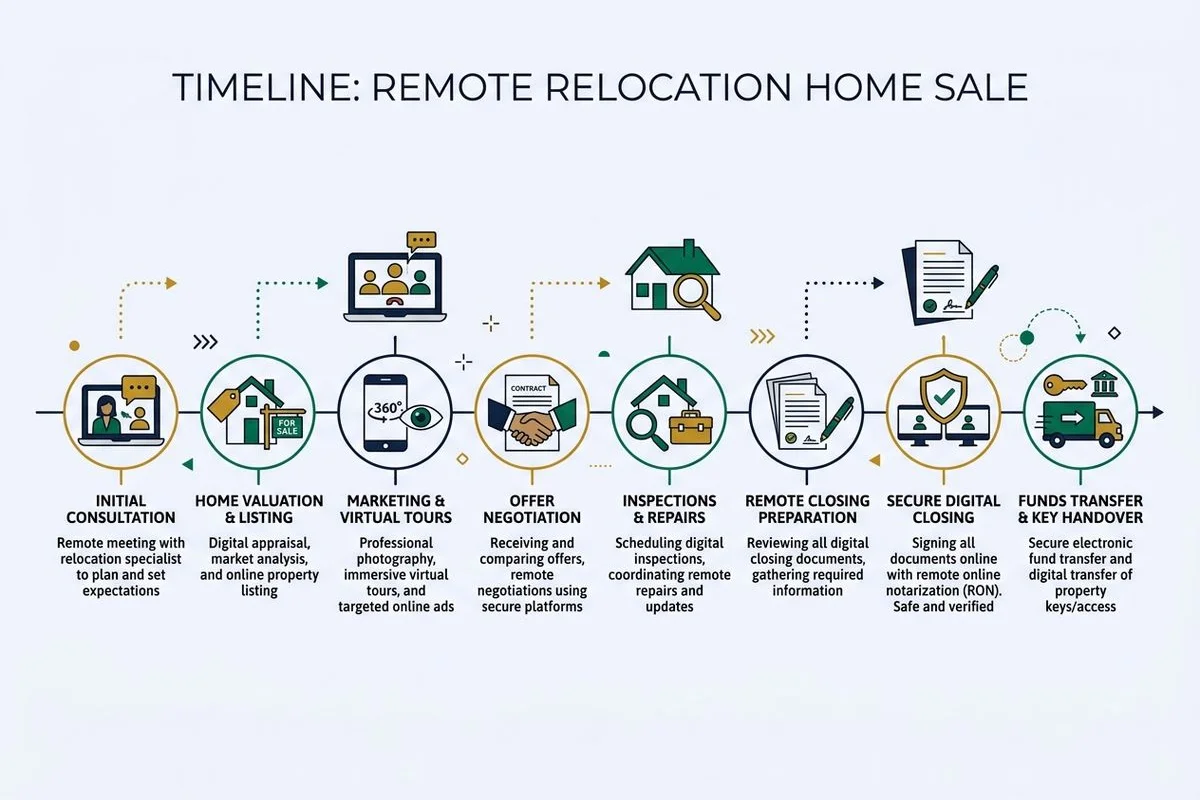
Several local factors directly influence exactly how fast your property will move. Our team tracks three specific details that dictate your timeline:
- Current market temperature in your specific neighborhood.
- The condition assessment of your property compared to nearby listings.
- Availability of qualified buyers moving into your specific county.
Sellers routinely fail by completely ignoring the holding costs of an empty house.
We strongly recommend you run your numbers against the Home Sale Net Proceeds Calculator before making a decision. This tool ensures you compare the actual net-to-you cash rather than just looking at the headline offer.
Remote closing options
We handle remote closings by utilizing Texas-approved digital platforms that let you sign documents from anywhere in the world. Remote Online Notarization is fully legal in Texas and uses secure X.509 compliant digital certificates to verify your identity.
Your physical location no longer delays the sale of your home. Our preferred title partners process these virtual closings efficiently using authorized software.
The Texas legislature recently strengthened digital real estate rules through Senate Bill 693, requiring stricter notary training and ten-year record retention for secure transactions in 2026.
We make sure your transaction complies with these updated mandates. Having two or three offers with a documented condition assessment creates a true negotiation, even from hundreds of miles away.
Cash sale vs. listing trade-off under time pressure
We always advise sellers that choosing between a cash offer and a traditional listing comes down to trading equity for speed. Cash buyers in the DFW market typically offer between 65 percent and 75 percent of your property’s After Repair Value.
A standard listing targets the full retail price but requires you to maintain the home for an average of two months. Our team helps you evaluate the true cost of waiting for a retail buyer.
Local investors will purchase the home exactly as it sits, completely eliminating your repair bills and agent commissions. Here is a realistic comparison of your main options based on recent 2026 data:
| Sales Method | Expected Timeline | Typical Net Value | Key Advantage |
|---|---|---|---|
| Traditional Listing | 45 to 60 days | 90% to 94% (after fees) | Highest possible profit |
| Direct Cash Offer | 7 to 14 days | 65% to 75% of ARV | Zero repairs or showings |
| iBuyer Purchase | 14 to 30 days | 85% to 90% (after fees) | Predictable closing date |
We find that properties needing significant repairs benefit most from the fast cash route. A move-in ready home located in a high-demand area like Collin County usually performs better on the open market.
Coordinating two moves; avoiding a double mortgage
We help clients avoid the crushing financial weight of two mortgages by utilizing strategic bridge financing or temporary leaseback agreements. Texas lenders currently offer bridge loan rates between 8.5 percent and 10.5 percent for qualified move-up buyers.
These short-term loans allow you to tap into your current home’s equity to fund the down payment on your new property. Our clients frequently use these specific tactics to manage the transition:
- Securing an interest-only bridge loan to minimize monthly carrying costs.
- Negotiating a 30-day to 60-day seller leaseback after the closing date.
- Requesting an extended closing period to align with the new purchase timeline.
A temporary leaseback serves as a fantastic alternative if you prefer to avoid extra interest payments.
We write these specific terms directly into the initial purchase contract to guarantee your living situation remains secure. You gain the exact funds needed for your new location without the nightmare of moving twice.
Where to go next
We designed this resource to clarify the exact steps required to execute your move successfully. The strategies discussed here provide a strong foundation to sell house fast when relocating dfw.
This guide acts as just one piece of a much larger local real estate topic. Our parent hub offers deeper insights, so start by visiting the sell my house fast dallas directory for related situation guides.
The right path depends heavily on the condition of your property and your desired timeline.
We encourage you to reach out directly if you feel unsure about which specific lane fits your home. Go ahead and Contact us today to get started.
A team member will point you to the correct guide or a reliable company review to secure your successful sale.
Related guide: cash offer vs. listing
FAQ
How fast can I sell if relocating from DFW?
A cash sale can close in ~1–2 weeks; a listing takes longer but may net more.
Can I close remotely?
Yes — Texas closings can often use mail-away or remote-notary documents.
Sell before or after I move?
Depends on deadline and finances; a fast sale avoids two housing payments.