Foundation Problems in DFW: Repair vs. Sell As-Is
DFW clay soil wrecks foundations. Compare repair cost against an as-is cash sale, learn your disclosure duty, and see which nets more.
Last updated:
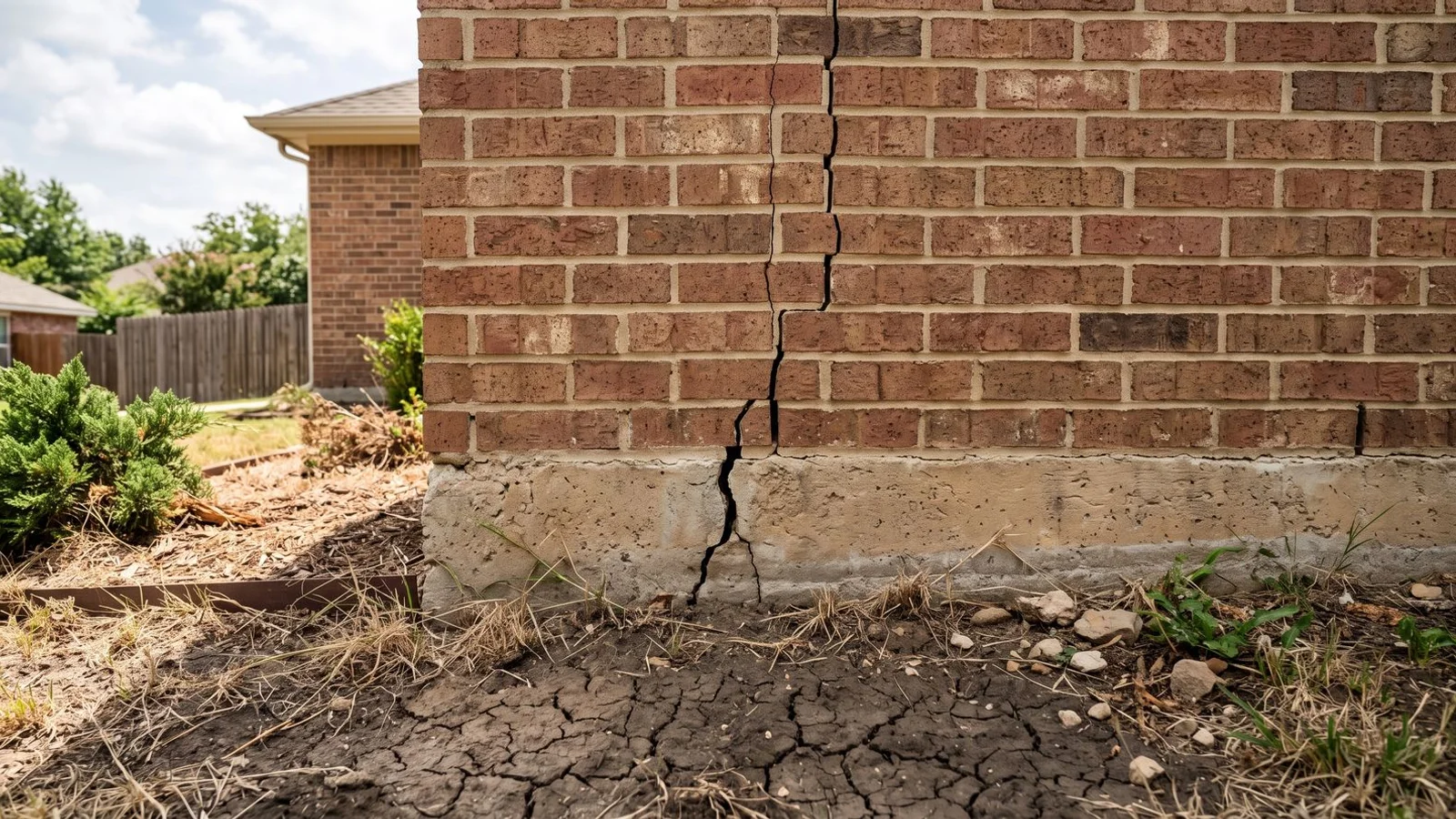
We hear the same frustration from North Texas property owners every single spring. The sudden appearance of a zigzag crack in your brickwork can completely derail your timeline for selling a home or commercial building.
Our team at DFW Real Estate Review knows that figuring out how to sell house with foundation problems DFW buyers will accept is a massive financial choice. Many sellers get tripped up by confusing a headline cash offer with their actual take-home money.
Our advice is to run your numbers against a reliable Home Sale Net Proceeds Calculator before committing to any option.
This simple step forces you to compare net-to-you figures rather than relying on initial bids. We built this resource, grounded in licensed Texas real estate experience (TREC #679806), to help you evaluate these exact local variables.
Let us look at the data behind expansive soil, what repairs actually cost in 2026, and practical ways to respond to cash offers.
Why DFW expansive-clay soil causes foundation movement
We attribute most local foundation movement directly to the high concentration of expansive clay in North Texas. This specific “black gumbo” dirt swells heavily when saturated with rain and shrinks dramatically during summer droughts.
Our geotechnical research shows that soils here consist primarily of montmorillonite and illite minerals. A recent 2026 NTSB report on local utility issues highlighted how this constant shrinking and swelling severely damages underground infrastructure and foundations alike.
We know that summer temperatures act as a major trigger for these structural shifts. Data from regional engineering studies reveals that average soil moisture in the upper ten feet can jump to 18 percent in wet months and drop rapidly during dry spells.
Our ongoing market analysis proves that this constant cycle of uplifting and dropping creates differential settlement. This mechanical reality dictates whether a quick cosmetic patch will hold or if you need permanent structural support.
We look at three main factors when assessing how the soil has impacted a specific Dallas or Fort Worth property:
- Moisture Volatility: Rapid transitions from heavy spring rains to 100-degree August days accelerate clay shrinkage.
- Drainage Slopes: Poor surface drainage allowing water to pool near the slab causes localized swelling.
- Vegetation Proximity: Large tree roots draw massive amounts of moisture from the clay during droughts.
The best move is getting a structural assessment before assuming the worst about your building. Our experience shows that buyers get much less anxious when they see a professional report explaining the actual soil mechanics at play.
Engineers can tell you exactly how much vertical movement has occurred.
Typical DFW foundation repair cost ranges
We find that the average foundation repair in the DFW metroplex costs around $5,223 in 2026. Your specific bill will fluctuate between $3,338 and $7,118 for standard residential fixes, depending on the severity of the settlement.
Our pricing data aligns with recent figures from Stratum Foundation Repair, which cites similar regional averages for standard piering jobs. The depth required to reach stable bedrock through our thick clay layers directly influences this final price tag.
We always break down the estimates based on the exact repair method proposed by the contractor. A major factor is whether the company uses concrete pressed pilings or steel piers.
Our project reviews show that steel piers cost between $1,200 and $3,000 per pier, making them a more expensive but highly durable option. This investment often pays off by securing the structure permanently against future soil heaving.
We organized the most common 2026 repair costs into a quick reference table for your planning:
| Repair Type | 2026 Estimated Cost Range | Best Used For |
|---|---|---|
| Polyurethane Foam Injection | $200 - $600 per area | Small cracks and minor void filling |
| Concrete Pressed Pilings | $700 - $1,200 per pier | Standard residential stabilization |
| Steel Pier Installation | $1,200 - $3,000 per pier | Severe settlement and heavy structures |
| Minor Crack Sealing | $300 - $1,500 total | Cosmetic fixes and slight shifts |
Competing offers matter immensely when facing these repair bills. Our clients save thousands simply by comparing different structural solutions rather than accepting the first quote they receive.
Getting just one bid serves as a starting price, while securing two or three bids with documented assessments gives you real negotiation power.
Your Texas disclosure duty for known issues
We must stress that Texas law strictly requires you to disclose any known foundation problems to potential buyers. You fulfill this obligation by completing the Seller’s Disclosure Notice mandated by Texas Property Code Section 5.008.
Our legal review confirms that attempting to hide past repairs or active structural movement creates massive liability. Buyers who discover concealed damage after closing have strong legal grounds to pursue damages under the Deceptive Trade Practices Act.
We see sellers mistakenly assume that listing a property “as-is” removes their disclosure duties. The standard TREC 1-4 contract already builds in the as-is condition, but you still have to reveal everything you know about the physical state of the building.
Our team uses the standard TREC Form 55-1 or the TXR 1406 form to document these conditions thoroughly. Honest answers on this form cost significantly less than defending yourself in a post-sale lawsuit.
We recommend gathering specific documentation before you sit down to fill out the disclosure paperwork.
- Engineering reports from previous structural assessments.
- Receipts and warranty documents from any past pier installations.
- Insurance claim records related to plumbing leaks or water damage.
- Estimates for uncompleted work if you decided not to fix the slab.
Having your records organized makes the process much less stressful. Our strategy involves presenting the disclosure alongside professional repair bids to show transparency and keep the negotiation focused on data.
Experienced investors in North Texas routinely factor standard clay-soil settling into their property valuations.
The as-is cash route and which choice nets more
We calculate that selling a DFW house as-is with unresolved foundation damage typically results in a 10 to 20 percent value loss on the open market. You might face an even steeper discount if you sell directly to off-market cash buyers, who frequently offer between 30 and 70 percent of the Fair Market Value.
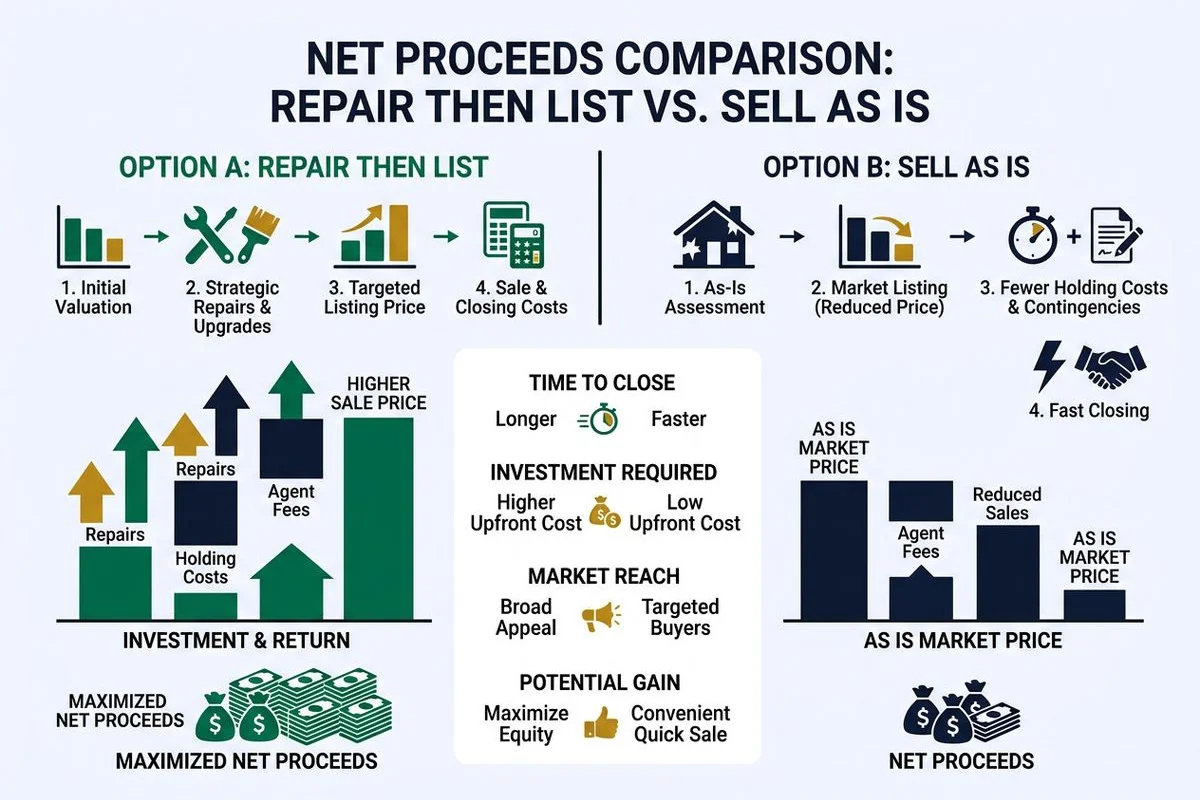
Our analysis shows that the right choice depends entirely on your available cash, your timeline, and your tolerance for managing a major construction project. Avoiding the lengthy repair process does provide instant relief, but it comes at a premium cost.
We divide the financial comparison into two distinct paths for property owners. Fixing the home before listing requires upfront capital but helps the property qualify for traditional mortgage financing.
Our data indicates this route attracts traditional retail buyers and usually maximizes your final net proceeds. A fully repaired home with a transferable warranty removes the biggest objection a retail buyer will have.
We suggest reviewing this quick comparison to see how the two strategies typically play out:
| Strategy | Timeline | Buyer Pool | Financial Impact |
|---|---|---|---|
| Repair Before Listing | Adds 2-4 weeks for work | Traditional buyers with mortgages | Requires upfront cash but maximizes final sale price |
| Sell As-Is on MLS | Standard listing time | Investors and conventional buyers | Yields a 10-20% price reduction |
| Direct Cash Sale | Closes in 7-14 days | Cash investors only | Nets the lowest amount (30-70% FMV) |
Soliciting multiple bids from cash buyers is the best way to create a bidding war. Our firm highly recommends getting a formal appraisal and a firm repair quote so you know the true math before signing a contract.
You maintain control of the transaction when you negotiate from a position of documented facts.
Where to go next
We designed this guide as just one piece of a larger strategy for handling distressed property sales. The best way to evaluate your next steps is to start with our primary resource hub on how to sell my house fast dallas.
Our team updates these related situation guides regularly to reflect current market shifts. You will find specific pathways branching out from that main page to fit your exact circumstances.
We remain available to help if you feel unsure about which lane fits your specific building or home. Feel free to Contact us directly with your questions.
Our staff will gladly point you to the right neighborhood guide or provide an objective local company review. Moving forward with confidence starts with getting the right information.
Related guide: what cash buyers pay
FAQ
Do I have to disclose foundation problems in Texas?
Yes — known foundation issues must be disclosed on the seller's disclosure notice.
Is it worth repairing before selling?
Sometimes for a listing; often an as-is cash sale nets similar after repair cost and hassle.
Will a cash buyer take a foundation house?
Yes — as-is investors buy them, pricing the repair into the offer.