How to Sell a Fire-Damaged House in DFW
Fire-damaged DFW home? Learn how insurance proceeds interact with a sale, the as-is investor route, disclosure, and realistic timelines.
Last updated:
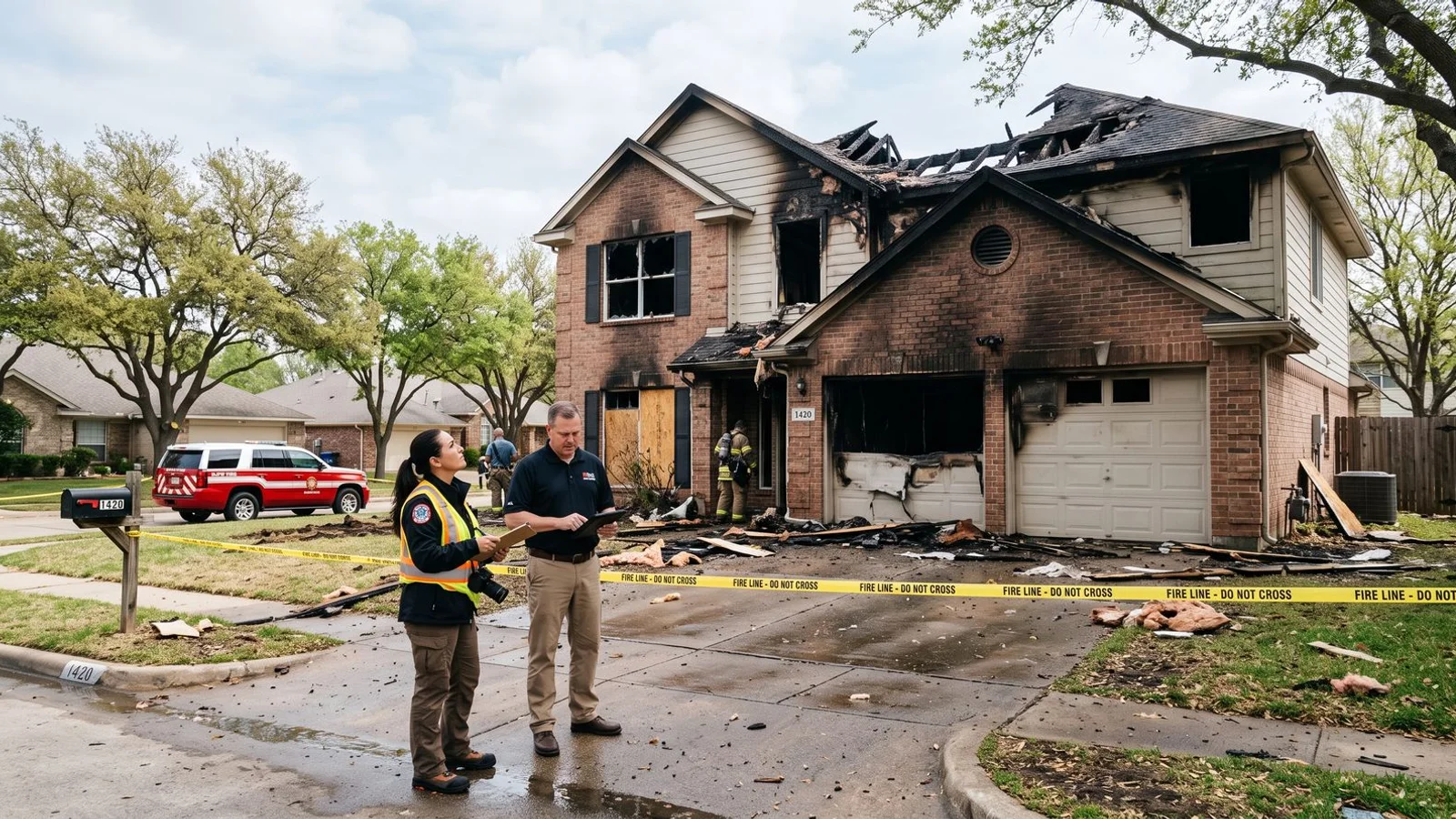
We know exactly how overwhelming it is to sell fire damaged house dfw properties. The aftermath leaves you dealing with adjusters, city inspectors, and contractors.
This guide cuts through the noise.
Our team at DFW Real Estate Review built this resource as licensed Texas real estate professionals (TREC #679806). Local market realities dictate your best move, not generic national advice.
We will break down how insurance payouts work, explain your disclosure laws, and lay out realistic timelines. Let’s look at the data so you can compare your options.
How insurance proceeds interact when you sell fire damaged house dfw
Your insurance payout remains entirely separate from your decision to sell the property. You can legally collect an actual cash value (ACV) settlement from your insurer and still sell the home exactly as it sits.
Our experts always tell sellers to finalize their claim approval before listing the property. The Texas Prompt Payment of Claims Act gives your insurance company 15 business days to acknowledge your initial claim.
They then have 15 calendar days to accept or reject it once they receive all requested documentation. Delays often happen if the insurer suspects arson or requires a deeper fire marshal investigation.
We strongly suggest running your expected settlement and potential sale prices through our Home Sale Net Proceeds Calculator. Comparing net-to-you figures prevents you from making an emotional financial mistake, and this tool helps you see the actual cash in your pocket.
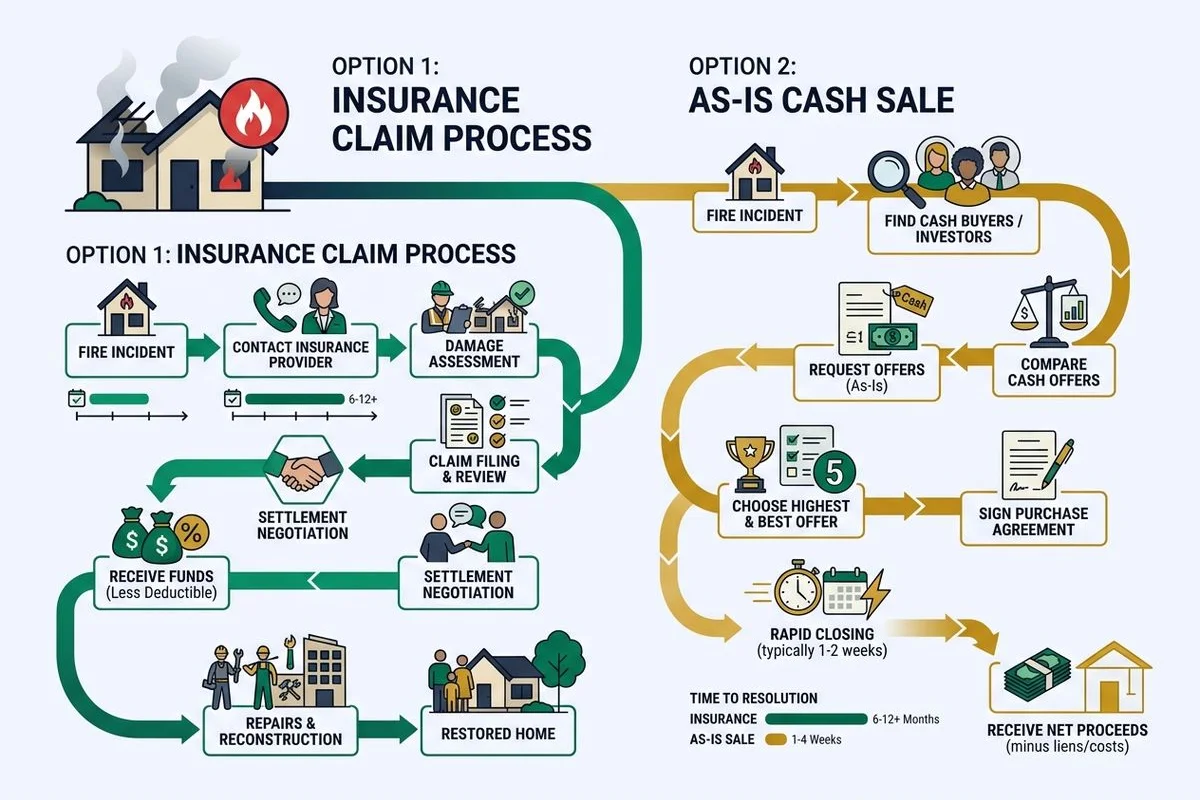
Steps to Maximize Your Claim Before Selling
We recommend following a strict order of operations to protect your payout. Mistakes here can cost you thousands in lost insurance funds.
- File your claim immediately after the fire department clears the scene.
- Request an advance payment for emergency housing and immediate board-up services.
- Wait for the adjuster to issue a final settlement statement before signing a real estate contract.
- Confirm with your agent that selling the property will not void any pending supplemental claims.
Our network of local attorneys notes that keeping these two transactions separate is the safest approach.
As-is investor buyers for fire-damaged homes
Selling a fire-damaged house in DFW to a local investor is the fastest way to offload the property. These cash buyers purchase the home in its current condition, completely bypassing lender required appraisals.
Our data shows that fire restoration in Dallas currently costs between $4 and $8 per square foot. Major structural fires easily push repair bills above $60,000.
Many homeowners simply do not have the time or upfront cash to manage a six month reconstruction project. You will typically see cash offers land between 40% and 60% below the home’s pre-fire market value, which accounts for the investor taking on the severe risk of hidden smoke and water damage.
We advise getting at least three competing cash offers to create an advantage. One offer is just a starting point, but multiple bids turn a lowball situation into a competitive negotiation.
Comparing Your Selling Methods
Our team created this breakdown to highlight the stark differences in 2026. A traditional listing requires patience, while a cash sale prioritizes speed.
| Factor | Traditional Buyer (Financed) | Cash Investor |
|---|---|---|
| Timeline to Close | 60 to 90 days | 7 to 14 days |
| Repair Requirements | Lenders require full fire restoration | None (Bought strictly as-is) |
| Appraisal Risk | High risk of loan denial | No appraisal contingency |
Your disclosure obligation
Texas law strictly requires you to disclose any known property defects. You cannot hide behind an “as-is” clause to avoid mentioning previous fires or structural issues.
Our compliance experts point directly to the Texas Property Code Section 5.008. This law mandates the use of a formal Seller’s Disclosure Notice for nearly all residential transactions, and Section 3 specifically asks sellers to check a box indicating awareness of any “Previous Fires.”
Failing to disclose this history is a fast track to legal trouble. Buyers can sue for fraud, demand financial damages, or legally cancel the contract right up until closing.
We always advise our clients to over-disclose everything. Provide any contractor estimates, fire department reports, and insurance claims you have on file to ensure maximum transparency.
Handling Hidden Smoke Damage
We know that fire leaves lasting impacts well beyond the charred wood. Smoke and soot easily penetrate drywall, HVAC systems, and attic insulation.
- HVAC Contamination: Smoke particles settle inside ductwork, causing persistent odors every time the system runs.
- Structural Odors: Porous materials like untreated wood framing absorb smoke, requiring specialized thermal fogging to neutralize.
- Water Damage: The water used to extinguish the flames often causes secondary mold growth within 48 hours.
Our team recommends disclosing the possibility of these hidden issues, even if you cannot see them. It is always better for the buyer to discover these during their inspection rather than after moving in.
Realistic timeline to close
Understanding your timeline requires looking at the current 2026 housing metrics for North Texas. The method you choose directly dictates how long you will hold the property.
Our market tracking shows that a standard, move-in ready home in Dallas currently averages 76 days from listing to closing. That timeline includes 47 days sitting on the market and 29 days for mortgage underwriting.
Selling a home with unrepaired fire damage on the traditional market takes substantially longer. Traditional buyers rely on bank financing, and lenders simply will not approve a mortgage on a structurally compromised house.
We see financed deals for damaged properties frequently fall apart at the appraisal stage. This pushes your actual timeline out to 90 days or more as you cycle through different buyers.
The Cash Closing Timeline
Our investor partners operate on a completely different schedule. Skipping the bank approval process eliminates weeks of waiting.
- Offer Phase: Cash buyers typically deliver a firm offer within 24 to 48 hours of viewing the damage.
- Inspection Period: Investors conduct brief condition assessments, often wrapping up within a few days.
- Closing Day: Title companies in Texas can clear a cash transaction in as little as 7 to 14 days.
We remind sellers that carrying costs add up quickly while a property sits vacant. Every extra month means paying another mortgage installment, property tax bill, and insurance premium.
Where to go next
This guide is one piece of a larger topic. If you are weighing next steps, start with the parent hub at sell my house fast dallas.
Related situation guides link out from there to cover other specific challenges.
We designed these resources to give you clear market intelligence. Finding the right information early prevents costly missteps.
Finding the best way to sell fire damaged house dfw properties starts with making an informed plan today.
Are you still unsure which lane fits your specific home? Please Contact us so our experts can point you to the right guide or company review.
We know your situation is unique, and getting personalized direction makes a huge difference.
Related guide: what cash buyers pay
FAQ
Can I sell a fire-damaged house as-is?
Yes — as-is investors buy them; disclose the damage and price accordingly.
What happens to my insurance payout if I sell?
Depends on your policy and timing; coordinate the claim and sale.
Do I have to disclose fire damage?
Yes — known fire damage is a material defect that must be disclosed.