Why Homeowners Here Choose a Fast Sale
DFW Real Estate Review covers every fast-sale option available to Lancaster TX homeowners, with Dallas County offer data researched by a licensed Texas real estate agent (TREC #679806) who has covered the DFW market since 2016. Lancaster’s housing stock — concentrated in the 1960s through 1990s — carries the deferred maintenance profile of one of southern Dallas County’s oldest suburban cities, with pockets along Houston School Road and Lancaster-Hutchins Road that reflect decades of deferred upkeep. Roofs installed during original construction, plumbing systems in the oldest downtown-area homes, and slab foundations on expansive clay soil have all been aging simultaneously, and the cost to bring a property to traditional listing condition often exceeds what a Lancaster seller can or wants to spend.
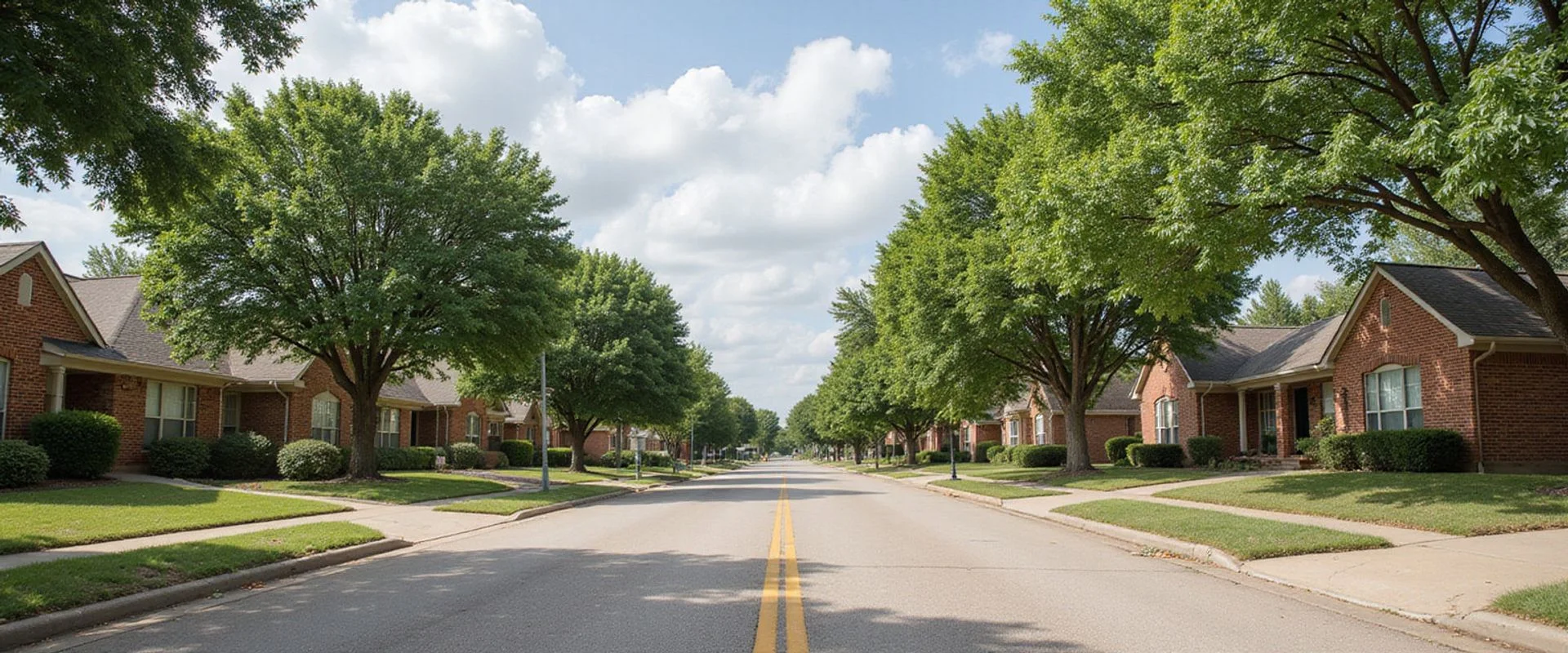
Oldest housing stock in the Best Southwest cluster. While DeSoto’s inventory skews 1980s-2000s and Cedar Hill has a meaningful newer-construction segment, Lancaster’s oldest neighborhoods — particularly the historic downtown area and surrounding streets — include homes that date to the 1960s and early 1970s. This housing age carries foundation movement risk from Dallas County clay soil, plumbing systems that have passed useful life, and roof structures approaching or past 30-year cycles. A seller in this position with an inherited property and no capital for pre-listing renovation is a natural cash-buyer candidate.
Most affordable price point in the Best Southwest. At $240,000-$290,000, Lancaster homes are priced below neighboring DeSoto, Duncanville, and Cedar Hill. This affordability draws heavy fix-and-flip investor interest because the acquisition cost is low enough to generate renovation margins and the Dallas County location keeps exit values achievable. The flip side is that Lancaster sellers receive more unsolicited cash offers — yellow letters, postcards, door knocking, cold calls — than almost any other city in the Best Southwest cluster. Knowing how to evaluate those offers is the most useful skill a Lancaster seller can have.
Inherited properties from longtime residents. Lancaster’s identity as the oldest incorporated city in Dallas County means it has a deep base of longtime residents who built equity across decades. When those properties enter probate — particularly 1960s and 1970s-era homes with significant deferred maintenance — the combination of distant heirs, multiple decision-makers, and homes that would require $25,000-$40,000 in updates to list traditionally creates fast-sale demand that is difficult to satisfy through the MLS.
Lancaster ISD and traditional listing pace. Lancaster ISD is a community anchor, but it does not carry the premium buyer draw of Plano ISD, Frisco ISD, or Carroll ISD. This matters for traditional listings: the buyer pool in Lancaster skews heavily FHA, VA, and FHA 203(k) renovation loan buyers rather than move-up buyers prioritizing school district prestige, and days on market for standard-condition homes can run 30-45 days longer than comparable properties in Collin County suburbs. For sellers with a firm timeline, that extension has a real holding-cost impact at the $7,500-$9,000 per year Dallas County property tax level on a $270,000 home.
Pre-foreclosure and deferred maintenance. Dallas County’s annual tax auction processes a meaningful share of southern county properties, and Lancaster’s affordability means some owners carry thin equity buffers when repairs and taxes accumulate. Sellers facing a Dallas CAD appraisal increase, a lien from delinquent taxes, or a pre-foreclosure notice often need a resolution faster than any MLS process can provide.
Four Ways to Sell a Lancaster Home Quickly
iBuyers in Lancaster
iBuyer coverage in Lancaster is more limited than in northern DFW suburbs. Opendoor and Offerpad operate with algorithms calibrated for higher-priced, more uniform inventory. Some Lancaster properties — particularly Pleasant Run corridor homes from the 1980s-1990s in standard condition — may receive iBuyer offers. Downtown-area homes built before 1975, homes with deferred maintenance, and properties with slab issues are routinely declined. If your Lancaster home qualifies, expect 85-92% of estimated market value before a 5-8% service fee, putting your net closer to 78-85% of market value.
iBuyers also work best in Lancaster when you can close on their timeline. If you need to remain in the property beyond their standard 14-30 day window, some offer a leaseback arrangement — but this adds complexity. If you do not receive a viable iBuyer offer, direct cash buyers are more active and more reliable in this price tier.
Direct cash buyers active in Lancaster
The direct cash-buyer market in Lancaster is extremely active relative to its size. HomeVestors franchises, regional fix-and-flip investment companies, and local operators actively target Lancaster, particularly for older inventory in the historic downtown core and the Pleasant Run corridor. At the $240k-$290k price point, investors can acquire, renovate for $30,000-$50,000, and exit at $300k-$330k while maintaining workable margins — making Lancaster one of the most consistent markets for cash offers in the southern Dallas County area.
Standard-condition Lancaster homes typically see 75-85% of market value with no service fee and a 7-14 day close. Older downtown-area and 1960s-1970s properties in need of significant renovation see 65-75% of after-repair value. Two cash offers on the same Lancaster home can vary by $10,000-$20,000. DFW Real Estate Review recommends shopping at least two buyers on any sale in this price range.
Wholesalers in Lancaster
Wholesaler activity in Lancaster is among the heaviest in the Best Southwest cluster — a direct consequence of its affordability and investor interest. If you received a handwritten postcard, a yellow-card mailer, or a door knock about your Lancaster home, the sender is likely a wholesaler rather than an end buyer. Wholesalers are legal in Texas but they extract a spread between your purchase price and what the end buyer pays, which reduces your net proceeds. Always ask: “Are you the end buyer, or will you assign this contract?” Request proof of funds regardless of the answer.
Speed-focused agents and flat fee MLS
Lancaster’s FHA and VA buyer pool is active at the $240k-$290k price range, and a speed-focused agent targeting pre-approved buyers can sometimes net more than a cash offer — particularly for Pleasant Run corridor or southern Lancaster homes in solid condition. A flat fee MLS listing through the NTREIS system is an option if you can manage showings yourself. For downtown-area properties with significant deferred maintenance or foundation concerns, the traditional listing lane typically extends timelines and rarely solves the underlying condition problem.

What Cash Buyers Actually Pay in 2026
Lancaster’s median home price runs approximately $240,000-$290,000 for standard-condition properties as of mid-2026. Here is how the four lanes translate into actual net-proceeds numbers on a $265,000 Lancaster home.
| Selling lane | Typical net on a $265k Lancaster home | Typical time to close |
|---|---|---|
| iBuyer (Opendoor / Offerpad) | $205,000-$231,000 (after 5-8% fee) | 14-30 days |
| Direct cash buyer, standard condition | $199,000-$225,000 (no fee) | 7-14 days |
| Wholesaler | $159,000-$185,000 (spread taken by assignee) | 7-21 days |
| Traditional / flat-fee MLS listing | $238,000-$250,000 (after approx. 5% commission) | 45-75 days |
The dollar gap between a cash sale and a traditional listing on a $265,000 Lancaster home is meaningful but smaller than in luxury markets. A 20% cash-buyer discount here equals $53,000 — versus $150,000 on a $750,000 property. For sellers with significant deferred maintenance, the calculation shifts further toward cash: a $265,000 home that needs $35,000 in repairs to list traditionally may only command $270,000 after those repairs, making the as-is cash net the more rational path once time and repair costs are factored.
Dallas County property taxes on a $265,000 Lancaster home run approximately $7,000-$8,500 per year. Every additional month on a traditional listing adds $580-$710 in holding cost, which narrows the gap between a fast cash close and a longer MLS process.
For the full cost-of-selling picture including title policy, prorations, and a worked net-proceeds example, see the cost to sell a house in Texas guide and run your specific numbers through the Home Sale Net Proceeds Calculator.
Best Southwest Real Estate - Where Lancaster Fits
Lancaster is the most affordable of the four Best Southwest cities — alongside DeSoto, Cedar Hill, and Duncanville — and the one with the oldest housing stock and heaviest per-door investor activity. Understanding where Lancaster sits within this cluster matters for pricing expectations and for knowing which buyer types are most likely to compete for your property.
Lancaster trades at a meaningful discount to its Best Southwest neighbors. This price differential is driven by housing age, Lancaster ISD’s market positioning, and the city’s relative distance from major employment corridors north of IH-35E and along the Dallas North Tollway. For buyers and investors, this gap is the point: Lancaster’s price floor allows renovation margins that are no longer available in cities like Mesquite or Garland where prices have moved up. For sellers, this means the cash-buyer market here is deep and active — but it also means you need to be careful about who is making offers and on what terms.
The Best Southwest cluster as a whole trades at a modest discount to northern DFW suburbs with comparable housing quality. This context matters: cash offers in Lancaster sometimes represent a higher percentage of true market value than in overheated northern markets like Frisco or Plano, where the cash-versus-listing gap in dollar terms is much larger.
The Oldest City in Dallas County
Lancaster was incorporated in 1886, making it the oldest incorporated city in Dallas County. Some of the homes surrounding historic downtown Lancaster have architectural character from the late 19th and early 20th centuries. In practice, however, most of the older housing stock in Lancaster is aged rather than historically significant, and many properties carry decades of deferred maintenance, outdated systems, and cosmetic wear that make a traditional MLS listing impractical without significant capital investment.
The historic identity is a local pride marker — and the downtown walkability and historic character do attract buyers who value them — but sellers of 1960s or 1970s-era homes outside the actual historic core should not expect the oldest-city designation to add meaningful premium. What the historic character does produce is a large base of longtime residents and inherited properties, which is one of the primary structural drivers of Lancaster’s cash-buyer market.
Lancaster Municipal Airport and the nearby Dallas Executive Airport are local features that do not materially affect residential values in most Lancaster neighborhoods but are worth disclosing to buyers who might research the area. Bear Creek Nature Park is a local amenity near the southern part of the city.
How Your Neighborhood Affects the Offer
Historic downtown area includes the oldest residential streets nearest to the original Lancaster town square. Homes here date from the early 20th century through the 1960s and vary significantly in condition. Properties in excellent restored condition can attract retail buyers who value historic character. Unrenovated homes routinely see direct cash-buyer offers at 65-75% of after-repair value. iBuyer coverage is minimal in this submarket, and the buyer pool for traditional listings is narrow.
Pleasant Run corridor represents Lancaster’s 1980s-1990s residential inventory along and near Pleasant Run Road. These homes are the city’s most uniform and iBuyer-accessible submarket. Standard-condition properties here are the best candidates for iBuyer offers and the strongest candidates for traditional MLS listings among Lancaster’s neighborhoods. Values are at or near the city median, and all four buyer lanes are realistically available on condition-appropriate properties.
Southern Lancaster near Red Oak border includes newer construction from the 1990s-2000s along the city’s southern edge near Ellis County, stretching along Belt Line Road and into the IH-35E corridor. These are Lancaster’s newest properties and the most likely to qualify for conventional buyer financing. Seller timelines here tend to have more options than downtown-area equivalents, and the proximity to the Red Oak and Ellis County growth corridors provides modest upside context that the rest of Lancaster does not share.
Common Seller Situations in the DFW Market
Situation guides written for Texas law and localized to the DFW market:
- Pre-foreclosure in Texas — particularly relevant for Dallas County homeowners facing delinquent property taxes or compounding liens
- Selling a house during divorce in Texas — covering Dallas County family court timelines and the TREC contract process
- Inherited house with multiple heirs — common in Lancaster estate situations, especially older properties with deferred maintenance
- Rental property with tenants in DFW — relevant for landlords exiting the Best Southwest rental market
- How to sell a house fast when relocating from DFW — applies to IH-35E corridor relocations and corporate transfers
Your Next Steps
If you have a Lancaster home and a real timeline, the minimum research is: an iBuyer offer (if your location and condition qualify), an offer from at least one direct cash buyer, and a listing-price opinion from a speed-focused agent. Run all three through the Home Sale Net Proceeds Calculator to see the actual number that hits your account after Dallas County property taxes, closing costs, and your mortgage payoff.
For the ranked list of specific companies to contact, the DFW Real Estate Review 2026 DFW cash home buyer rankings includes per-company scoring, fee breakdowns, referral disclosure, and independent verdicts on who is and is not worth calling for a Lancaster home.