Why Duncanville Homeowners Need a Quick Sale
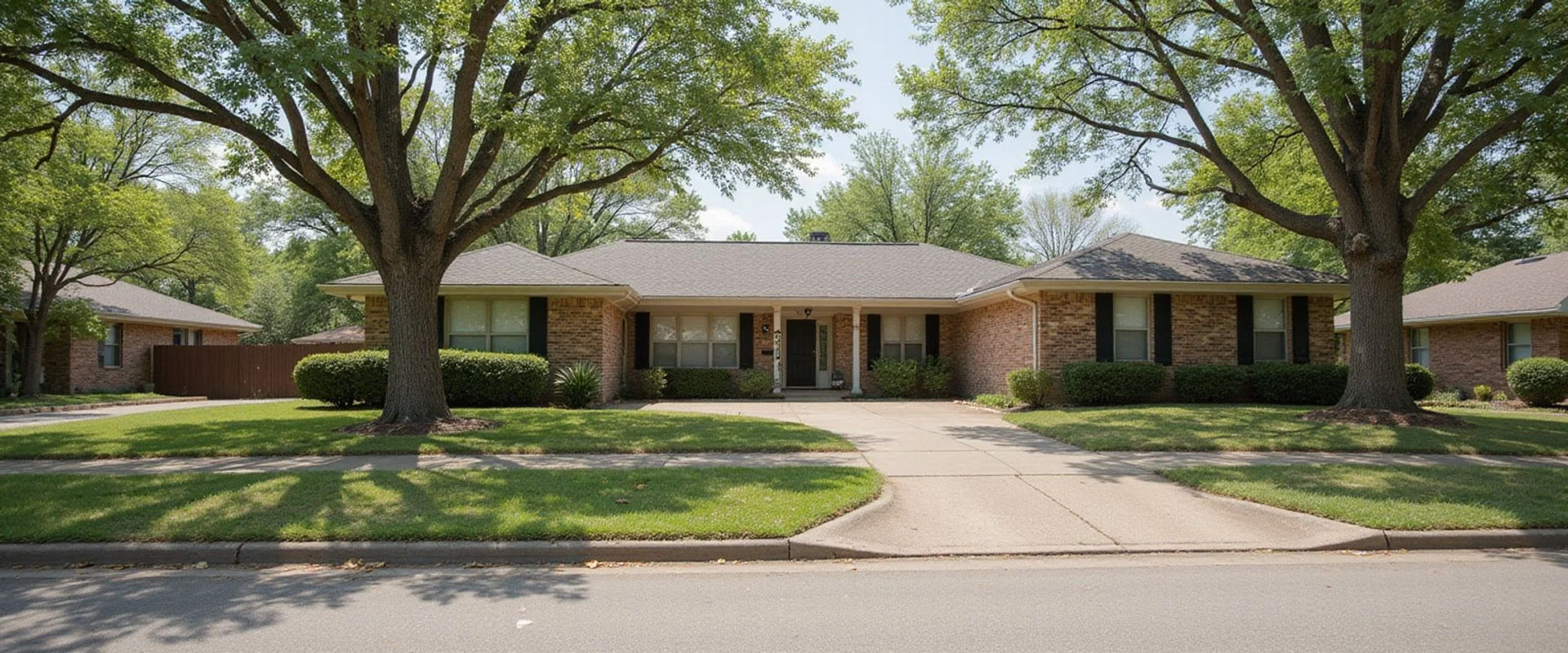
DFW Real Estate Review covers every fast-sale option available to Duncanville homeowners, with analysis written by a licensed Texas real estate agent (TREC #679806) who works the Dallas-Fort Worth market. Duncanville’s fast-sale demand comes from a source that is largely different from what drives it in newer DFW suburbs: the city’s housing stock. Situated along the IH-20 and US-67 corridors in southern Dallas County, Duncanville is the oldest of the four Best Southwest cities, with the majority of its single-family brick ranch inventory built between the early 1960s and the late 1980s. That age profile creates a specific set of seller pressures found at higher rates here than in any other Best Southwest city.
Oldest housing stock in the Best Southwest cluster. While DeSoto’s inventory skews toward 1980s-2000s construction and Cedar Hill has a mix from multiple eras, Duncanville’s residential core was built out during the 1960s, 1970s, and early 1980s. That puts most of the city’s homes at 40-60 years of age in 2026 — well into the era where original systems are at or past end-of-life simultaneously.
Foundation movement on clay soil is the norm, not the exception. Dallas County clay soil expands in wet conditions and contracts in dry conditions, creating seasonal movement in slab foundations. On homes built in the 1960s and 1970s, this movement has accumulated over decades. A significant portion of Duncanville’s housing stock shows some degree of slab movement — evident in door frames that stick, floors that slope slightly, cracks in brickwork or drywall, or gaps at interior trim. For buyers using conventional or FHA financing, a lender-required foundation repair before closing is common. For sellers who cannot fund $5,000-$20,000 in structural work, a cash sale is the practical path.
Galvanized plumbing creates insurance and financing problems. Homes built in Duncanville before approximately 1985 were commonly fitted with galvanized steel water supply lines rather than copper or PVC. Galvanized pipe corrodes from the inside, reducing water pressure over time and eventually failing. Insurance carriers increasingly price galvanized-pipe homes at higher rates or decline coverage. FHA and VA lenders can require plumbing updates as a condition of financing. The cost to repipe a Duncanville home — typically $4,000-$10,000 or more depending on size — is a real obstacle for sellers who cannot fund updates before listing.
Original roofing, electrical panels, and HVAC systems. On a home built in 1972, the original roof is more than 50 years old. The original electrical panel may be a Federal Pacific or Zinsco model that modern insurance carriers will not cover. The original HVAC system, if it is somehow still running, is well past its expected service life. These are not unusual situations in Duncanville — they describe a broad cross-section of the city’s residential inventory. Sellers facing this combination of deferred maintenance often find that the cost of making a home retail-ready exceeds what the resulting price increase would cover.
Traditional financing is difficult on condition-flagged homes. FHA appraisers are trained to flag foundation movement, active roof leaks, galvanized plumbing, inoperable systems, and health-safety concerns like older electrical panels. When FHA appraisals require repairs before loan approval, they effectively remove the largest buyer pool from the equation for condition-challenged Duncanville properties. Cash buyers operate outside this constraint.
Inherited homes from original Duncanville residents. Duncanville was built out during the post-war suburban expansion era. Many of the families who bought those original homes in the 1960s and 1970s have aged in place. When those properties enter probate — often with 40-50 years of deferred maintenance, distant heirs, and the full condition profile described above — the traditional listing path is slow, expensive, and complicated. A cash sale to an experienced local buyer is the practical solution.
Four Ways to Sell a House Fast in Duncanville
iBuyers in Duncanville
iBuyer coverage in Duncanville is limited by the city’s housing stock profile. Algorithmic buyers like Opendoor and Offerpad use condition, home age, and repair predictability as core approval variables. Homes built in Duncanville in the 1990s or later in solid condition have the best chance of receiving an iBuyer offer; these are concentrated in the southern part of the city near the Cedar Hill border. The majority of Duncanville’s 1960s-1980s inventory — with galvanized plumbing, foundation movement, older electrical, and roofs at or past expected service life — does not clear iBuyer approval criteria. If your Duncanville home qualifies, expect 85-92% of estimated market value before a 5-8% service fee, putting your net closer to 78-85% of market value.
Direct cash buyers active in Duncanville
The direct cash-buyer market in Duncanville is one of the most active in the southern Dallas County cluster. Duncanville’s $220,000-$300,000 price point and condition profile make it a natural fix-and-flip market. HomeVestors franchises, regional investment companies, and local operators actively acquire inventory here — particularly in the Main Street and Clark Road corridors and along Danieldale Road, where the oldest single-family brick ranch properties trade at the lowest price points and carry significant renovation upside. Standard-condition homes typically see 75-85% of market value with no service fee and a 7-14 day close. Homes with major foundation issues, galvanized plumbing, or roofing needing replacement see 65-75% of after-repair value, with the investor pricing in those specific repair costs.
Two cash offers on the same Duncanville home can vary by $15,000-$30,000 depending on how each buyer estimates condition-specific repair costs. DFW Real Estate Review recommends shopping at least two buyers on any Duncanville property with known condition issues.
Wholesalers in Duncanville
Wholesaler activity in Duncanville is present and has increased as the Best Southwest cluster’s affordability has attracted more assignment deal operators. If you received a handwritten postcard or a yellow-letter mailer about your Duncanville home, there is a good chance the sender is a wholesaler rather than an end buyer. Wholesalers in Texas assign contracts to end buyers for a fee — which reduces your net proceeds because the actual end buyer pays the wholesaler’s spread on top of your purchase price. Always ask: “Are you the end buyer or will you assign this contract?” Request proof of funds regardless.
Speed-focused agents and flat fee MLS
A traditional or flat fee MLS listing in Duncanville is a viable option for homes in the southern part of the city with 1980s-1990s vintage in good condition, or for Cedar Ridge area properties that have been meaningfully updated. Duncanville ISD’s athletics identity — particularly the nationally ranked basketball program at Duncanville High School — creates a genuine family buyer pool. A speed-focused agent who knows how to market to that buyer segment can sometimes net more than a cash offer on a well-maintained property. For Main Street-area and Clark Road-corridor homes with significant deferred maintenance and condition issues flagged by FHA appraisers, the traditional listing lane is typically not the fastest or most practical route.

What Cash Buyers Pay for Duncanville Homes in 2026
Duncanville’s median home price runs approximately $250,000-$280,000 for standard-condition residential inventory, with homes in updated condition pushing toward $290,000-$300,000 and homes with significant deferred maintenance trading below $250,000. Here is how the four lanes translate into actual net-proceeds numbers on a $265,000 Duncanville home.
| Selling lane | Typical net on a $265k Duncanville home | Typical time to close |
|---|---|---|
| iBuyer (eligible condition homes only) | $205,000-$230,000 (after 5-8% fee) | 14-30 days |
| Direct cash buyer, standard condition | $199,000-$225,000 (no fee) | 7-14 days |
| Wholesaler | $159,000-$185,000 (spread taken by assignee) | 7-21 days |
| Traditional / flat fee MLS listing | $238,000-$252,000 (after approx. 5% commission) | 45-75 days |
Note on condition adjustments. Homes with major foundation movement, active galvanized plumbing issues, or roofing requiring replacement will see direct cash buyer offers in the 65-75% of after-repair value range rather than the 75-85% of market value range shown for standard-condition properties above. The investor prices in the cost of the repair; the seller accepts a lower number in exchange for certainty and no repair requirements.
Dallas County property taxes on a $265,000 Duncanville home run approximately $6,400-$6,900 per year — roughly $530-$575 per month in holding cost. Every month a traditional listing extends adds that amount to your cost of waiting, which is the real comparison when evaluating a fast cash offer against a longer MLS timeline.
For the full cost-of-selling picture including title company fees, Dallas County tax prorations, and a worked net-proceeds example, see the cost to sell a house in Texas guide and run your specific numbers through the Home Sale Net Proceeds Calculator.
How Home Condition Affects Your Sale Price
This is the central fact about Duncanville’s housing market that sellers need to understand before contacting any buyer.
Most of Duncanville’s residential inventory — the Main Street corridor, the Clark Road and Camp Wisdom Road neighborhoods, the areas around Wheatland Road, Danieldale Road, and US-67, and much of the Cedar Ridge neighborhood — was built in the 1960s, 1970s, and early 1980s. That makes these homes 40-60 years old in 2026. Foundation movement, galvanized water supply lines, cast iron sewer drain lines, outdated electrical panels, and original or near-original HVAC systems are not unusual features in Duncanville homes. They are the norm.
What this means for sellers. A seller in a 1972 Duncanville home faces a realistic choice. To prepare that home for a traditional retail sale — repairing the foundation ($5,000-$20,000), repiping from galvanized to PVC or copper ($4,000-$10,000), replacing the roof ($8,000-$15,000), updating the electrical panel ($2,500-$5,000), and replacing the HVAC system ($5,000-$12,000) — the total investment commonly runs $30,000-$80,000 at 2026 contractor rates before the home is competitive with comparable inventory in better condition. For a seller who cannot fund that investment, and who may not recover it fully in the sale price, a cash sale becomes the rational alternative.
The honest math. A cash buyer who offers 70-75% of after-repair value on a Duncanville home is pricing in their repair costs and flip margin. The seller who accepts receives certainty — a number, a closing date, and no repair requirements — in exchange for the spread. Whether that trade is worth it depends entirely on the seller’s capital position, timeline, and alternatives. The condition profile of Duncanville’s housing stock makes cash buyers the practical answer for a larger share of Duncanville sellers than in most DFW suburbs.
Duncanville ISD Athletics and Traditional Listing Value
Duncanville High School has built one of the most recognized athletics programs in Texas. The Panthers basketball team has been ranked in national high school polls and competes consistently at the highest level of Texas UIL athletics. The football program has won multiple district and regional titles, with deep playoff runs. This is not ordinary suburban school district marketing — Duncanville ISD’s athletics identity is a genuine community differentiator.
For sellers using the traditional listing lane, this creates a real buyer segment: families who are specifically choosing Duncanville based on the school’s programs and the community culture around them. Buyers seeking competitive athletics for their children at a $250,000-$280,000 price point — a level that is unachievable in the northern suburbs with comparable school prestige — represent meaningful demand for Duncanville traditional listings.
This buyer segment does not overcome severe condition problems. A family wanting their child at Duncanville High School will still require a functioning foundation and working plumbing. But for Duncanville homes in reasonable condition, the ISD athletics angle supports both days-on-market and pricing in ways that pure price-per-square-foot analysis does not capture.
Common Seller Situations in Southern Dallas County
Situation guides written for Texas law and localized to the DFW market:
- Pre-foreclosure in Texas — particularly relevant for Dallas County homeowners facing compounding deferred maintenance costs alongside mortgage delinquency
- Selling a house during divorce in Texas — covering Dallas County family court timelines and the TREC contract process
- Inherited house with multiple heirs — common in Duncanville estate situations, especially 1960s-1970s properties with the full deferred maintenance profile and distant heirs
- Foundation problems in DFW: repair vs. sell as-is — directly applicable to a large share of Duncanville’s housing stock
- How to sell a house fast when relocating from DFW — applies to IH-20 and US-67 corridor relocations from southern Dallas County
Your Next Steps to Sell
If you have a Duncanville home and a real timeline, the minimum research is: an iBuyer offer if your home and condition profile qualify, an offer from at least one direct cash buyer experienced in Duncanville’s 1960s-1980s single-family inventory along the IH-35E and IH-20 corridors, and a listing-price opinion from a speed-focused agent familiar with the Duncanville ISD buyer pool. Run all three through the Home Sale Net Proceeds Calculator to see the actual number that hits your account after Dallas County property taxes, closing costs, repair concessions, and your mortgage payoff.
If you want the ranked list of specific companies to contact, the 2026 DFW cash home buyer rankings has per-company scoring, fee breakdowns, referral disclosure, and independent verdicts on who is and is not worth calling for a Duncanville home.