Why NRH Homeowners Need a Fast Sale
DFW Real Estate Review - an independent review site operated by a licensed Texas real estate agent (TREC #679806) covering the DFW market since 2016 - built this North Richland Hills guide for sellers who need to move a property on a real deadline. Most people searching “sell my house fast North Richland Hills TX” are working with a timeline constraint or a home that is difficult to move through conventional channels. What sets NRH apart from bigger Tarrant County cities is a combination of local factors that push motivated sellers toward the fast-sale market.
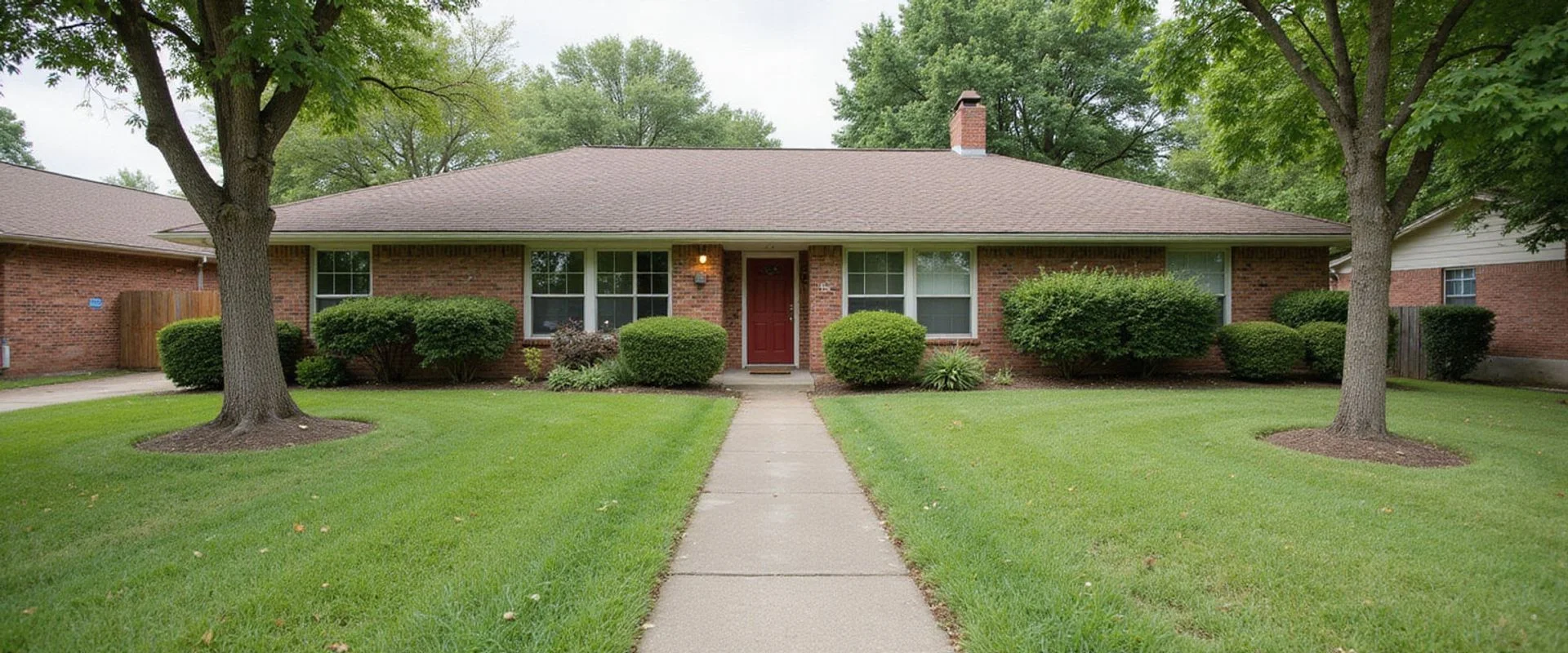
Aging 1960s-1980s ranch-style housing stock. The backbone of NRH’s residential inventory is the wave of ranch-style brick homes built during the Mid-Cities suburban expansion of the 1960s through the 1980s. These properties are at the age where major systems fail: roofs, HVAC units, galvanized plumbing, and electrical panels that predate modern code. Owners who cannot fund $25,000-$50,000 in necessary updates find the cash-buyer market is the most realistic path forward.
Foundation work on expansive Tarrant County clay soil. North Texas clay soil is notoriously expansive, and NRH’s older housing stock - including slab-on-grade and pier-and-beam foundations - has decades of seasonal movement behind it. Foundation repair quotes in the $8,000-$20,000 range are common on 1960s-1970s NRH homes, and lenders will not finance a property with active foundation movement. For sellers facing this situation, an as-is cash sale is often the only workable option on a tight timeline.
Mid-Cities location and longer days on market. NRH sits in the Mid-Cities cluster, equidistant from Dallas and Fort Worth but not closely identified with either. Traditional buyers looking for a clear “Dallas suburb” or a “Fort Worth suburb” pass over the Mid-Cities area in favor of cities with a stronger proximity identity. The result is that standard NRH homes sit 5-15 additional days on the MLS compared to similar homes in more distinctly positioned suburbs, which adds holding cost and erodes the net-proceeds advantage of a traditional listing.
Inherited properties from longtime Mid-Cities residents. North Richland Hills has a substantial base of homeowners who bought in the 1960s-1980s and built significant equity over decades. When those properties pass to heirs through Tarrant County Probate Court, the combination of family disputes, out-of-area beneficiaries, and homes in poor condition creates fast-sale demand that the traditional MLS cannot easily absorb.
Landlord exits from the NRH rental market. The Mid-Cities area has a meaningful rental stock, particularly in the older ranch-home inventory near the Loop 820 and Airport Freeway corridors. Landlords who encounter problem tenants, deferred maintenance beyond repair budgets, or shifting family priorities choose to exit rather than invest further. These properties are prime territory for direct cash buyers.
Four Lanes for a Fast Home Sale
iBuyers in North Richland Hills
Opendoor and Offerpad operate across the Tarrant County market and cover a meaningful portion of NRH. Their coverage is strongest for standard 3-bed/2-bath homes built roughly 1990-2015 in good to fair condition. NRH’s 1960s-1980s ranch stock — which makes up a large portion of the city’s inventory — frequently falls outside iBuyer criteria because of age, deferred maintenance, and foundation risk. If your home is a newer build in good condition, request iBuyer offers as a starting point. If it is a ranch-era property with any significant maintenance issues, a direct cash buyer is a more reliable first call.
Direct cash buyers active in NRH
The direct cash-buyer market for NRH is active. HomeVestors franchises, regional investment companies, and smaller local operators regularly acquire inventory in the Mid-Cities area. Their focus is the 1960s-1980s ranch stock, which they purchase to renovate and hold as rental or flip to owner-occupants. Offers on habitable, standard-condition NRH homes typically land at 75-85% of market value with no service fee and a 7-14 day close. Distressed ranch homes needing major renovation typically see 60-75% of after-repair value. Shopping across at least two direct buyers before accepting an offer is worth the effort — two offers on the same NRH home can vary by $10,000-$25,000.
Wholesalers in NRH
Wholesaler activity in the Mid-Cities area is meaningful because the affordable price points and aging inventory attract assignment deals. If you have received a handwritten postcard, a yellow-card mailer, or a call from someone claiming to “have buyers” but unable to show proof of funds, you are almost certainly talking to a wholesaler. Wholesalers put your home under contract and assign that contract to an end investor for a fee — legal in Texas if fully disclosed, but your net proceeds are lower because the end investor pays more than what the wholesaler offered you. Ask directly: “Are you the end buyer, or will you assign this contract?” Ask for proof of funds in either case.
Speed-focused agents and flat fee MLS
A listing agent who works the investor side of NTREIS can sometimes net you a higher cash offer than any of the above, by marketing to a curated list of active buyers competing for the same Mid-Cities inventory. This lane works best when the home is in habitable condition and can be shown quickly. A flat fee MLS listing is also an option if you are comfortable managing the process yourself and the home qualifies for traditional financing. For distressed ranch-era properties in NRH, this lane rarely outperforms a direct cash offer once holding costs and repair concessions are factored in.
What Cash Buyers Actually Pay in 2026
NRH’s median home price runs in the $290,000-$340,000 range for standard-condition properties, per recent Tarrant County comparable sales. The DFW Real Estate Review team breaks down how the four lanes translate into actual net-proceeds numbers on a $310,000 NRH home.
- iBuyer: 85-92% of market value before a 5-8% service fee. On $310,000, a headline offer around $263,000-$285,000 nets approximately $253,000-$270,000 after fees.
- Direct cash buyer, standard condition: 75-85% of market value, no service fee. Net approximately $232,000-$263,000, with a 7-14 day close.
- Wholesaler: 60-70% of after-repair value. On a standard-condition $310,000 home, net proceeds land around $186,000-$217,000.
- Traditional listing: After 5% commission and closing costs, net approximately $272,000-$282,000, but that timeline runs 60-90 days and requires the home to qualify for conventional financing.
| Selling lane | Typical net on a $310k NRH home | Typical time to close |
|---|---|---|
| iBuyer (Opendoor / Offerpad) | $253,000-$270,000 (after 5-8% fee) | 14-30 days |
| Direct cash buyer, standard condition | $232,000-$263,000 (no fee) | 7-14 days |
| Wholesaler | $186,000-$217,000 (spread taken by assignee) | 7-21 days |
| Traditional / flat-fee MLS listing | $272,000-$282,000 (after approx. 5% commission) | 60-90 days |
Note that Tarrant County property taxes of 2.4-2.6% add $615-$675 per month in holding cost on a $310,000 NRH home. Every month a traditional listing extends adds that amount to your cost of waiting, which shifts the break-even math between a fast sale and a longer timeline.
For the full cost-of-selling picture, including title policy, prorations, and a worked net-proceeds example, see the cost to sell a house in Texas guide and run your specific numbers through the Home Sale Net Proceeds Calculator.

How the Mid-Cities Location Affects Your Sale
NRH is the largest city in the Mid-Cities cluster — a suburban belt that includes Hurst, Euless, Bedford, Richland Hills, Haltom City, and Watauga between Dallas and Fort Worth. The Airport Freeway (SH-121/183), SH-26, Loop 820, and Rufe Snow Drive form the primary road grid, and regional access is genuinely good: DFW Airport is roughly 10 miles to the northwest, and the Mid-Cities Boulevard corridor connects the cluster’s commercial spine.
But the Mid-Cities identity has a specific consequence for traditional home sellers: it reads as “between” rather than “close to” either major city, and that affects how buyers perceive and prioritize it in their search. Buyers who want proximity to Dallas employment often look east or northeast toward Garland, Richardson, or Plano. Buyers who want proximity to Fort Worth’s cultural anchors and western neighborhoods look southwest. The Mid-Cities cluster is positioned as a practical choice — solid infrastructure, reasonable commutes, Birdville ISD — rather than an aspirational address.
For motivated sellers, this positioning has a silver lining: it keeps the cash-buyer market competitive. Investors and direct buyers value the Airport Freeway access and the Mid-Cities’ central location within the broader DFW labor market, and they factor that accessibility into their offers on NRH properties. The buyer pool for cash purchases in NRH is deeper than the city’s relatively modest median price would suggest, because investors understand the hold-and-rent appeal of a well-located Tarrant County suburb with lower acquisition costs.
How Your Neighborhood Affects Your Offer
Smithfield area. Smithfield is NRH’s historic core — a small grid-pattern neighborhood with homes dating to the early 1900s through the 1950s, centered near Iron Horse Boulevard and Mid-Cities Boulevard. The NRH2O city waterpark and Iron Horse Golf Course are within this same general corridor, giving the area community amenities that investors factor into hold-and-rent calculations. These older homes sit outside the iBuyer profile and are handled by direct cash buyers and renovation-focused investors. If you own a Smithfield-area property, direct cash buyers and speed-focused agents are your primary audience.
Mid-Cities Boulevard and Airport Freeway corridor. Properties along the primary corridors of Mid-Cities Boulevard and the Airport Freeway (SH-121/183) span a range of ages and conditions. Older 1960s-1970s ranch homes along these corridors see strong investor interest. Noise and traffic proximity can affect appraised values but actually help with investor-buyer demand, since buyers in this corridor are typically investors rather than owner-occupants. If your home is in this zone, plan to engage direct cash buyers rather than iBuyers as your first call.
Loop 820 frontage. The southern edge of NRH runs along Loop 820. Homes in this zone tend to be older, face higher noise exposure from the freeway, and attract a narrower buyer pool for traditional listings. Direct cash buyers and investors are the realistic primary market for properties within close range of Loop 820. Sellers in this area should not expect iBuyer offers or retail buyers to set the price.
Northern NRH near Rufe Snow Drive. The northern residential areas along Rufe Snow Drive and toward the Watauga and Keller city lines include a mix of ranch-era and 1980s-1990s construction. Homes in better condition in this area can qualify for iBuyer offers and attract traditional buyers. If your home is in north NRH and in decent condition, all four buyer lanes are realistically available to you, which is the best position to be in when comparing offers.
Guides for Common Seller Situations
Situation guides written for Texas law and localized to the DFW market:
- Pre-foreclosure in Texas — particularly relevant when Tarrant County property taxes compound financial pressure
- Selling a house during divorce in Texas — covering Tarrant County family court timelines and the TREC contract
- Inherited house with multiple heirs — common in Mid-Cities estate situations where heirs are spread across multiple states
- Rental property with tenants in DFW — relevant for NRH landlords exiting the Mid-Cities rental market
- How to sell a house fast when relocating from DFW — applies to Airport Freeway corridor corporate relocations with tight timelines
Ready to Sell Your House Fast?
If you have an NRH home and a real timeline, the minimum research is: an iBuyer offer (if your home and location qualify), an offer from at least one direct cash buyer, and a listing-price opinion from a speed-focused agent. Run all three through the Home Sale Net Proceeds Calculator to see the actual number that hits your account after Tarrant County property taxes, closing costs, and your mortgage payoff.
If you want the ranked list of specific companies to contact, the DFW Real Estate Review 2026 DFW cash home buyer rankings has per-company scoring, fee breakdowns, referral disclosure, and independent verdicts on who is and is not worth calling for an NRH home.